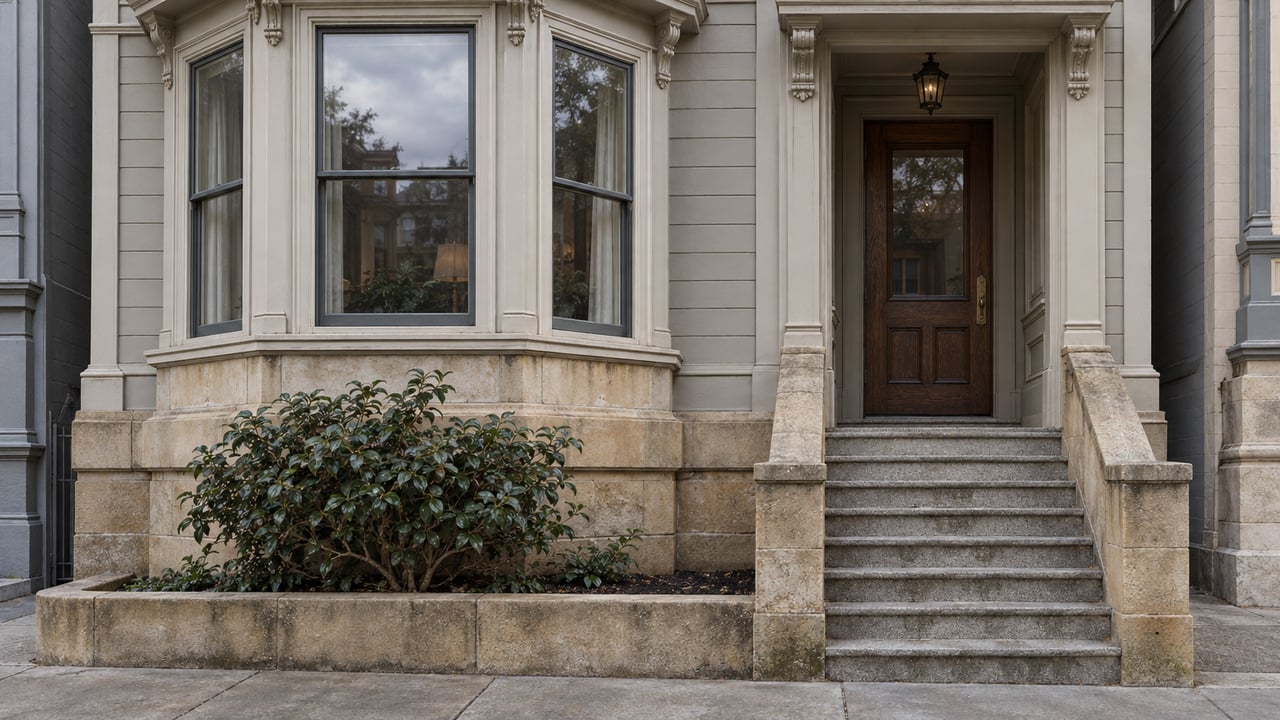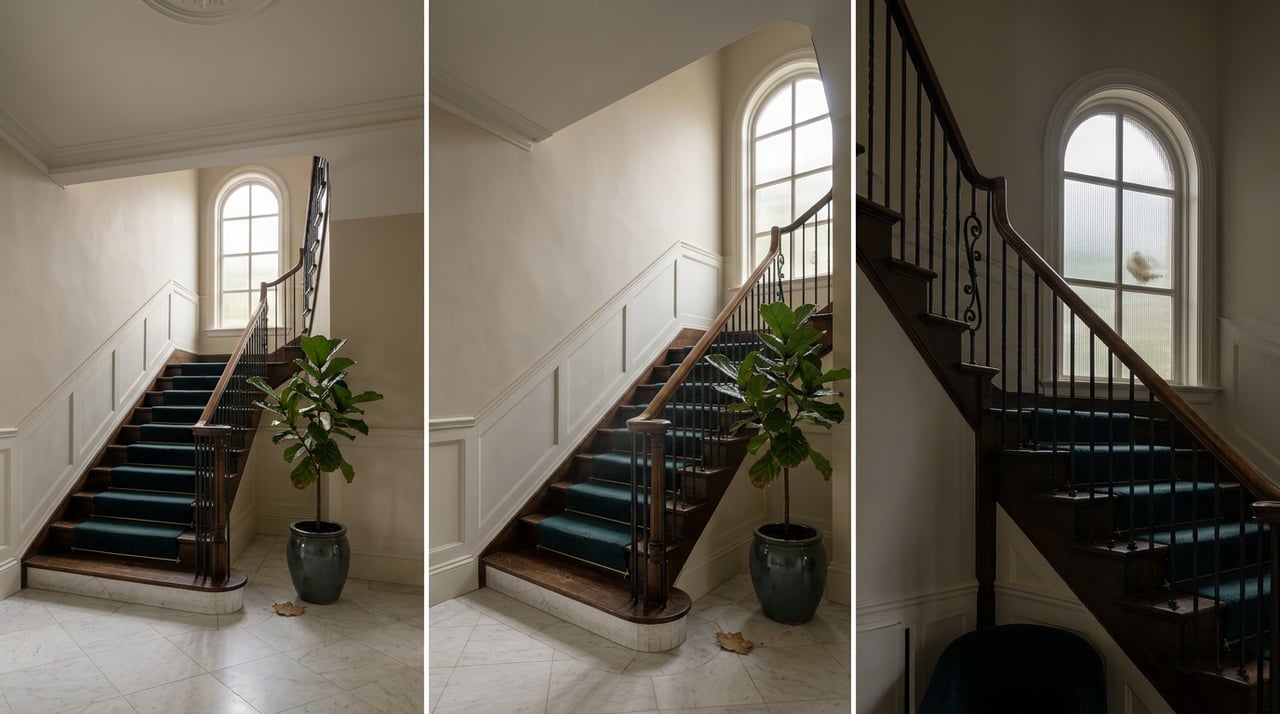
The Perry House at 2606 Jackson Street has been sitting on the market at $22.5 million since late April. If it closes at that number this month, the seller's transfer tax bill will reflect the new rates. Same house, same street, same buyer pool. The only thing that changed is the calendar.
That change is the direct result of a rate cut San Francisco enacted on large transactions, and it lands squarely on the price range where Pacific Heights does most of its business.
The change that matters most for Pacific Heights is the rate cut on sales above $10 million.
What Changed on July 1
The Real Deal reported that Proposition I, approved by voters in 2020, roughly doubled rates on high-dollar sales; San Francisco's official rate schedule shows rates as high as 6%. This year, Mayor Daniel Lurie and Supervisor Bilal Mahmood introduced a package called the BUILD Act aimed at rolling those top-tier rates back to where they stood before Prop I. It passed, and under the official ordinance, the new rates apply to any transfer occurring on or after July 1, 2026.
Here's the schedule as it stands right now, in early August:
| Sale Price | Rate through June 30, 2026 | Rate July 1, 2026 forward |
|---|---|---|
| Up to $250,000 | 0.5% | 0.5% |
| $250,000 to $999,999 | 0.68% | 0.68% |
| $1,000,000 to $4,999,999 | 0.75% | 0.75% |
| $5,000,000 to $9,999,999 | 2.25% | 2.25% |
| $10,000,000 to $24,999,999 | 5.5% | 2.75% |
| $25,000,000 and above | 6% | 3% |
Notice what didn't move. The $5 million to $10 million bracket is untouched, still taxed at 2.25%. The cut only applies to the two tiers above $10 million. That's a narrow change on paper. In Pacific Heights, where trophy sales routinely clear eight figures, it's the tier that decides the size of the check at closing.
Three Recent Sales
2830 Pacific Avenue, a Georgian Colonial on a street-to-street triple lot, sold at its full $27.5 million asking price in April after sitting on the market for a year.
2898 Vallejo Street, the Beaux-Arts mansion tied to the Alioto family, sold off-market for $56 million on April 7, the largest San Francisco residential sale since 2024.
The Perry House at 2606 Jackson, listed for $22.5 million by Sotheby's agents Stacey Caen and Joseph Lucier, falls in the $10 million to $25 million bracket.
Why This Lands Hardest Here
Pacific Heights isn't the only San Francisco neighborhood with expensive homes, but it's one of the few where a meaningful share of listings clears eight figures on a normal week rather than as an outlier. Broadway and Vallejo carry some of the city's largest lots and its most consistent bay views, and local coverage of the Vallejo Street sale called Pacific Heights long shorthand for big-money real estate for a reason.
Demand at the top of the market has been strong enough this year that agents have started describing it as a supply problem rather than a demand problem. Sotheby's agent Annie Williams, quoted in the San Francisco Standard's coverage of the Vallejo Street sale, put it plainly: "there really is a housing crisis at the upper end, a mansion shortage." When inventory this scarce moves, the tax bracket attached to the sale price stops being a footnote and starts being a real number in the seller's net proceeds.
Below $10 million, none of this changes: the $5 million to $10 million bracket remains at 2.25%, and the calendar only starts doing real work once a Pacific Heights listing crosses into eight figures.
What This Means If You're Selling Above $10 Million
- Know which side of the line your price falls on. A list price of $9.9 million and one of $10.1 million sit in different worlds now that the upper brackets have been cut, and your agent should be running both numbers before you set an asking price.
- Model the closing date, not just the offer. A buyer's proposed timeline can change your net proceeds even if the offer price never moves.
- Loop in your escrow officer early. Your title company can confirm the exact bracket and rate before you're negotiating under pressure.
- Watch the November ballot. The rate cuts took effect by ordinance, but Greenberg Traurig reports that the city has a companion measure headed to voters this fall that would end the transfer tax exemption for certain foreclosure-related transfers. It's part of the same larger rewrite of how the city taxes property transfers.
- Don't assume your comp's tax bill matches yours. Every sale has its own structure, and a local escrow officer or real estate attorney should confirm the specifics for your transaction.
A Question Worth Asking Directly
Is this the same tax people call the "mansion tax"? It's related but not identical. Proposition I, passed by voters in 2020, is what raised rates on high-dollar sales in the first place. The BUILD Act doesn't undo what Prop I did at $5 million to $10 million. It only rolls the two tiers above $10 million back to where they stood before Prop I passed.
If you're weighing a sale in this range, the timing and structure questions above are exactly the kind of thing worth working through before you set a list price, not after an offer arrives. Kate Stoll works Pacific Heights regularly and can walk through what your specific price point and timeline actually mean at closing. Schedule a consultation.
This article is general information, not legal, tax or financial advice. Consult a qualified professional about your situation.